
Fleet Cybersecurity: Protecting Connected Vehicles as a New Corporate Risk
Modern vehicles are no longer just a means of transportation. They are connected to the internet, cloud services, mobile apps, and corporate systems. This digitalization brings greater convenience, more efficient fleet management, and a wealth of data for fleet managers. At the same time, however, it creates new security challenges. Cybersecurity is therefore becoming one of the key issues in corporate fleet management.
Connected cars can communicate with manufacturers, service centers, navigation services, and telematics platforms. Each of these connections represents a potential entry point for a cyberattack. Although modern automakers are equipped with advanced security mechanisms, the responsibility for protecting vehicles does not end with the manufacturer. Companies must also consider their own processes, user management, and the protection of sensitive data. Today, fleet risk encompasses not only traffic accidents and operating costs but, increasingly, digital risks as well.
In this article, we’ll explore why fleet cybersecurity is an important part of modern fleet management, what risks connected cars pose, and how companies can effectively mitigate cyber threats.
Why Cybersecurity Is a New Priority for Corporate Fleets
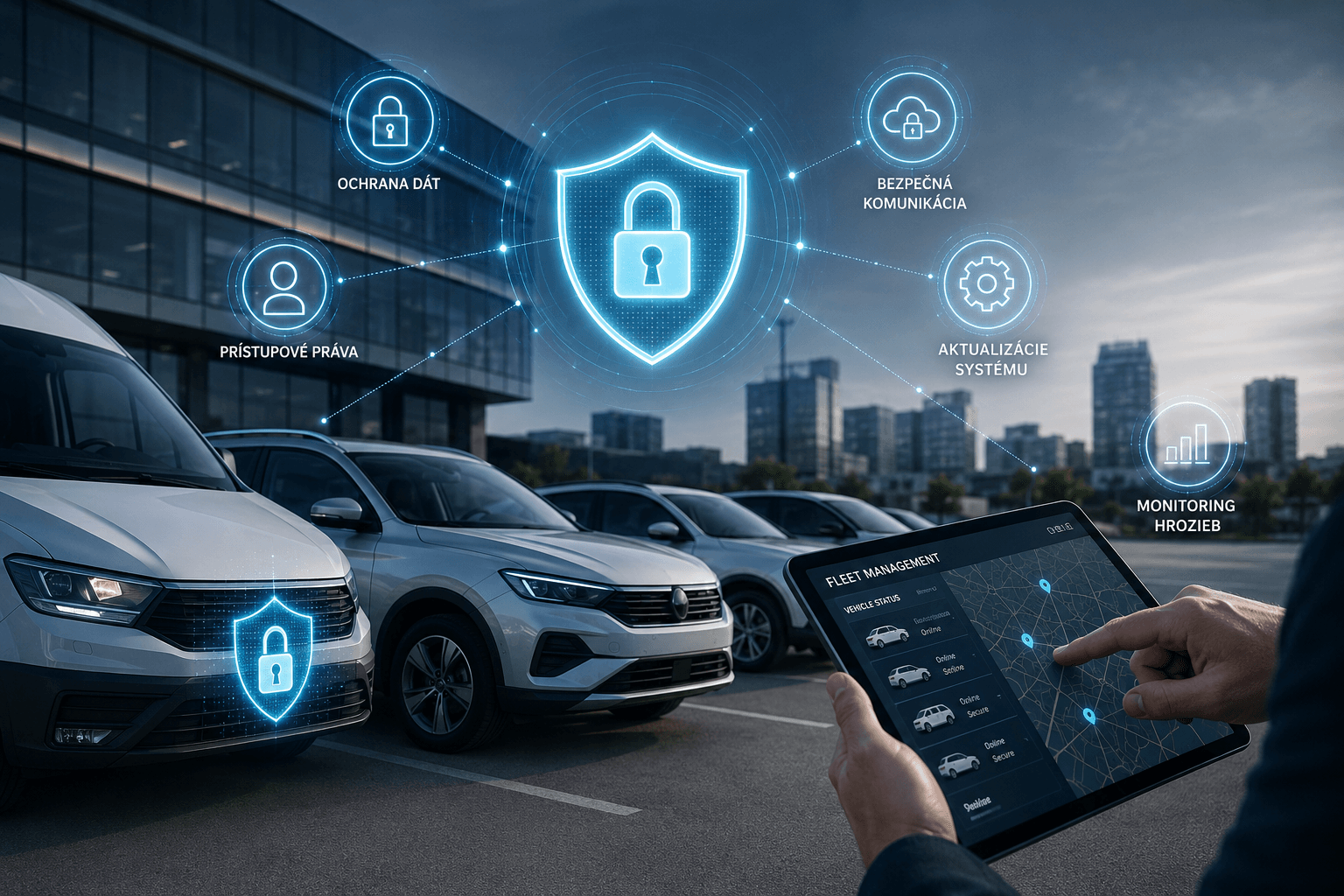
The digitization of vehicles has introduced a host of features that didn’t exist just a few years ago.
Among the most common are:
- remote vehicle unlocking,
- online diagnostics,
- GPS tracking,
- remote software updates,
- mobile apps for drivers,
- integration with corporate systems.
However, every new digital feature also increases the potential for cyber incidents. That is precisely why cybersecurity is becoming a natural part of modern fleet management.
Connected cars introduce new types of fleet risks
Connected vehicles generate large amounts of data.
This includes, for example:
- vehicle location,
- driver behavior,
- fuel consumption,
- service data,
- route data,
- user profiles.
What risks arise?
The most common risks are:
- unauthorized access to the vehicle,
- leakage of company data,
- compromised user accounts,
- misuse of GPS data,
- phishing targeting fleet administrators,
- attacks on cloud platforms.
In most cases, the weakest link is not the vehicle itself, but the user or inadequately secured internal processes.
Cybersecurity in fleet management isn’t just about technology
Companies often invest in modern vehicles but underestimate the importance of internal security policies.
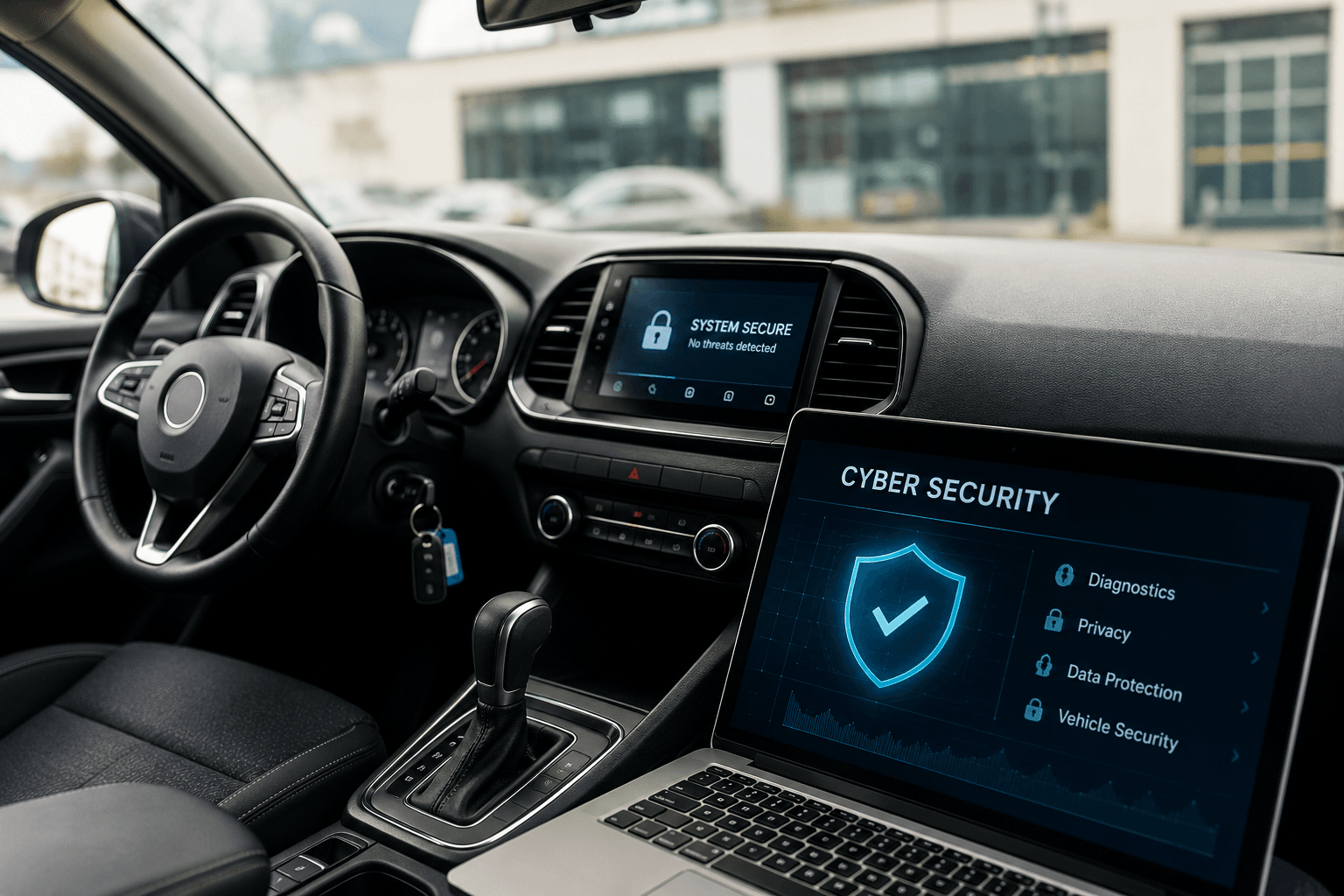
Successful fleet protection rests on three pillars:
People
- driver training,
- recognizing phishing attacks,
- safe use of mobile apps,
- protection of login credentials.
Processes
- regular review of access rights,
- user records,
- secure vehicle handover,
- immediate deactivation of accounts upon an employee’s departure.
Technologies
- multi-factor authentication,
- encrypted communication,
- regular software updates,
- security incident monitoring.
It is precisely the combination of these three areas that significantly reduces overall fleet risk.
How to Reduce Fleet Risk in Practice
Every company can take a few simple steps that will significantly increase the level of protection.
Practical Checklist
Before introducing new vehicles, verify:
- who has access to the fleet system,
- whether automatic updates are enabled,
- how mobile apps are secured,
- where vehicle data is stored,
- whether there is a security incident response plan,
- how often user permissions are reviewed.
Regular audits are usually less expensive than dealing with the consequences of a successful cyberattack.
The Importance of Software Updates for Connected Cars
Today, software in vehicles is updated in much the same way as the operating system on a computer or smartphone.
Manufacturers regularly fix:
- security vulnerabilities,
- system stability,
- navigation services,
- communication modules,
- driver assistance features.
Delaying updates can increase a vehicle’s vulnerability. Therefore, they should be part of standard fleet management.
Personal data protection is part of cybersecurity
Connected cars process large amounts of data about both drivers and vehicles.
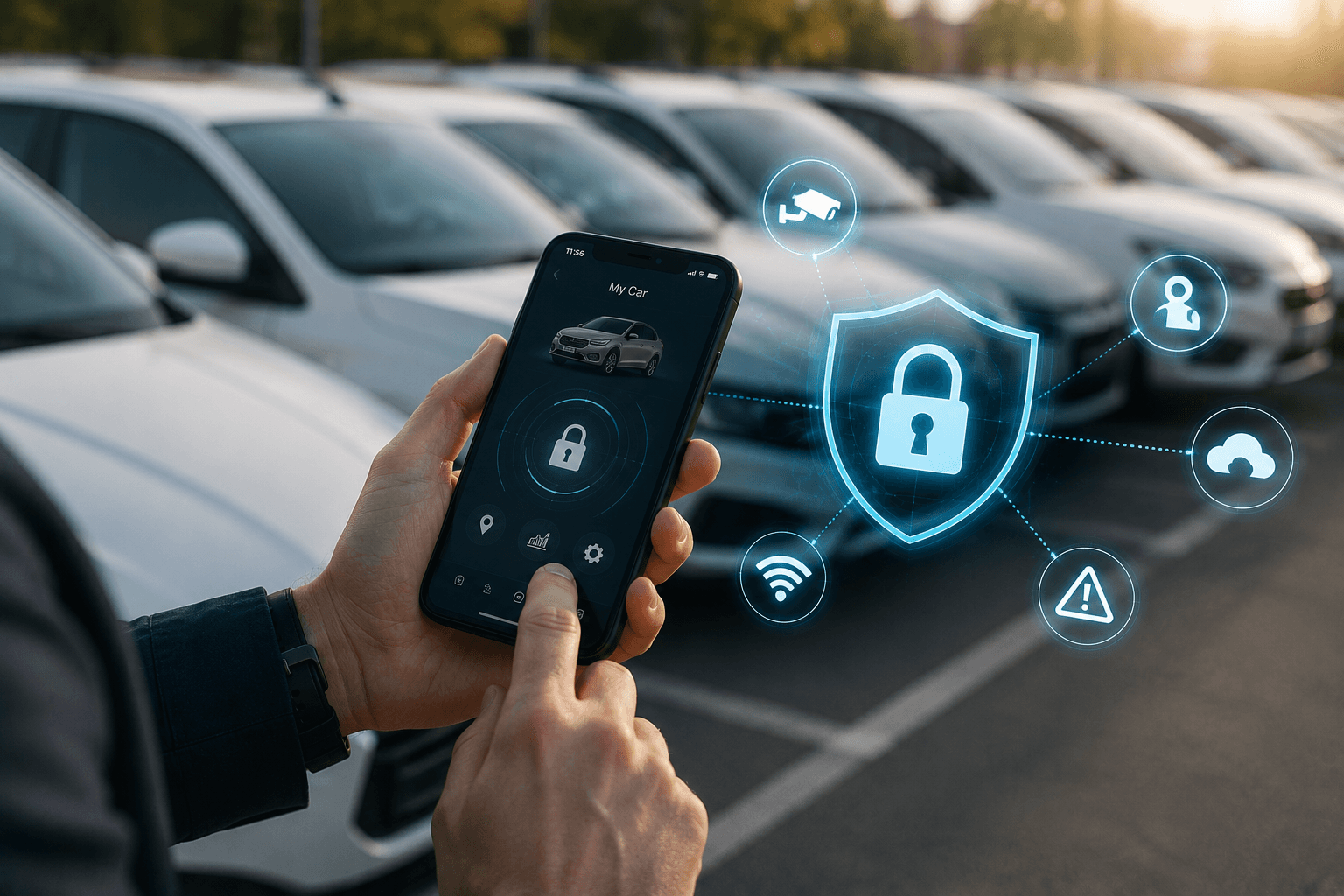
This may include:
- trip history,
- location data,
- contact information,
- service records,
- user account data.
Companies should clearly define:
- who has access to the data,
- how long it is retained,
- to whom it is provided,
- how it is securely deleted after the vehicle is no longer in use.
Transparent data management reduces both legal and reputational risks.
The Future of Fleet Cybersecurity
The number of connected vehicles will continue to grow in the coming years.
With this, the importance of:
- artificial intelligence in threat detection,
- automated security checks,
- remote vehicle management,
- advanced telematics monitoring,
- manufacturers’ safety standards.
Cybersecurity will thus become just as important a part of fleet management as maintenance, insurance, or the optimization of operating costs.
Conclusion
Vehicle digitization brings companies greater efficiency, better planning, and more detailed operational data. At the same time, however, it creates new risks that cannot be underestimated. Cybersecurity, the protection of connected cars, and active fleet risk management should be a natural part of every modern fleet management strategy.
Companies that regularly update their software, establish clear security processes, and train their employees significantly reduce the likelihood of security incidents and protect not only their vehicles but also valuable company data.
FAQ
What does fleet cybersecurity mean?
It refers to a set of technical and organizational measures designed to protect connected vehicles, corporate data, and fleet systems from cyber threats.
Are connected cars secure?
Modern vehicles include advanced security mechanisms, but properly configured corporate processes and regular updates also play a crucial role.
What is fleet risk?
Fleet risk encompasses all risks associated with fleet management—from accidents and operating costs to cyber threats.
How can a company improve its cybersecurity?
Through regular employee training, software updates, access rights reviews, and the use of multi-factor authentication.
Why are vehicle updates important?
They eliminate known security vulnerabilities, improve system stability, and protect the vehicle from new types of attacks.
TL;DR
- Cybersecurity is becoming a key component of modern fleet management.
- Connected cars bring new possibilities, but also new security risks.
- The biggest risk is often not the technology itself, but poorly configured processes.
- Regular updates and employee training significantly reduce fleet risk.
- Data protection and secure access management are an integral part of corporate fleet management.
- Prevention is significantly more effective and less expensive than dealing with the consequences of a cyber incident.